
An ovarian cyst diagnosis can feel worrying, especially if surgery has been mentioned. The good news — most cysts can be removed safely with a minimally invasive, ovary-sparing technique that means less pain and a faster return to normal life.

An ovarian cyst is a fluid-filled sac that forms on or inside the ovary. Many cysts are harmless and resolve on their own, but some need medical attention — when a cyst is large, growing, painful, not resolving after a few cycles, or suspicious on ultrasound, surgery may be recommended.
Laparoscopic ovarian cystectomy is a keyhole procedure that removes the cyst while leaving the healthy part of the ovary intact. Instead of a large abdominal cut, Dr. Nidhi Agrawal uses a few small incisions and a laparoscope — a thin, camera-guided instrument — to see and operate inside the pelvis, preserving ovarian tissue whenever it's medically safe to protect natural hormone function and fertility.
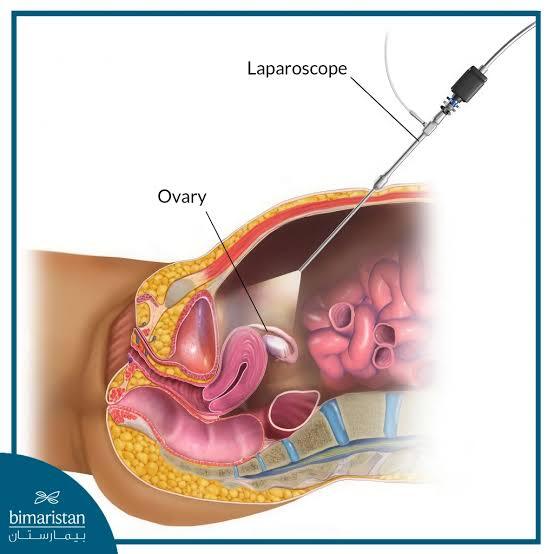
"Removing the cyst, preserving the ovary — care built around your long-term health."
Your doctor may recommend surgery after a thorough evaluation, particularly if the cyst is:
A cyst that is significant in size or increasing over successive scans.
Persistent pelvic pain or a feeling of pressure that affects daily comfort.
A cyst that hasn't gone away on its own after a few menstrual cycles.
Imaging features that need closer evaluation or removal to confirm they're benign.
A cyst that may be interfering with ovarian function or conception.
Menstrual irregularity linked to the cyst that hasn't improved otherwise.
Patients often confuse a cyst operation with full ovary removal — here's the key difference.
Only the cyst is removed; the healthy ovary is preserved. This is the recommended option in most benign cases, supporting natural hormone function and fertility.
The entire ovary — and sometimes the fallopian tube — is removed. Recommended only when the cyst is very large, suspicious for cancer, or the ovary cannot be safely preserved.
Healthy ovarian tissue is preserved wherever medically safe, protecting hormone function and fertility.
Just a few keyhole cuts instead of one large abdominal incision, with minimal visible scarring.
Often just a single day, sometimes with same-day discharge.
A quicker return to daily activities, typically within 2–3 weeks.
Pre-surgical assessment using ultrasound and clinical evaluation to plan the right approach.
Clear aftercare instructions and availability for follow-up if anything feels unusual.
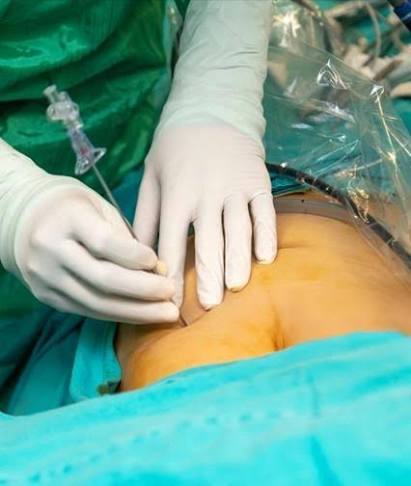
The patient is given general anaesthesia before the procedure begins, so you remain comfortable and asleep throughout.
A few small incisions — usually 3–4 — are made in the abdomen to insert the laparoscope and surgical instruments.
The laparoscope gives the surgeon a clear, magnified view of the pelvis to work with precision.
The cyst is carefully separated from the healthy ovarian tissue, preserving the ovary wherever possible.
The cyst is removed through one of the small incisions, which are then closed with dissolvable stitches.
Often just a single day in hospital, sometimes with same-day discharge.
Light activity is usually possible; mild soreness, bloating, or shoulder tip pain from surgical gas is common.
Return to work, typically within 1–2 weeks depending on the nature of the job.
Full recovery generally by 2–3 weeks; strenuous exercise and heavy lifting best avoided until 3–4 weeks.
Most patients recover smoothly. Here's what's normal to notice in the days after surgery:
Mild soreness or bloating around the incision sites for a few days.
A temporary, referred discomfort caused by the gas used during laparoscopy.
Light vaginal spotting can occur in the days following surgery.
It's normal to feel more tired than usual while your body heals.
Minor bruising near the incision sites, which fades with time.
It's considered a moderate surgical procedure. While it involves general anaesthesia, the minimally invasive technique makes it far less taxing on the body than open surgery.
In most cases, no. Since healthy ovarian tissue is preserved during a cystectomy, fertility is generally not affected. Your doctor will discuss your specific case in detail.
Cyst surgery removes only the cyst and keeps the ovary intact, while oophorectomy removes the entire ovary. Doctors choose oophorectomy only when necessary.
Most patients feel back to normal within 2–3 weeks, though full recovery time can vary based on the individual case.
No, most ovarian cysts are benign. Dr. Nidhi Agrawal uses imaging and clinical evaluation to assess each cyst before recommending treatment.
Schedule a consultation with Dr. Nidhi Agrawal for a thorough evaluation and a clear treatment plan tailored to your needs.
Book Appointment