
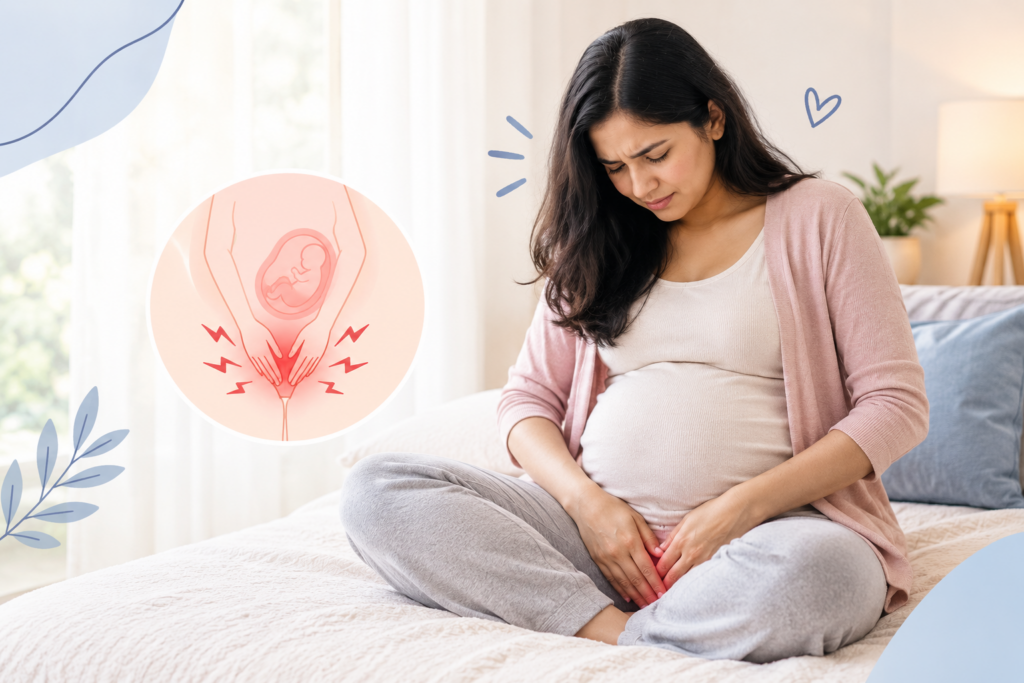
Feeling a sudden twinge down there can be scary when you are expecting. The good news is that vaginal pain during pregnancy is common, and most of the time it is not a sign of danger. Your body is growing a baby, your hormones are changing, and your muscles and ligaments are stretching. All of this can cause discomfort.
Still, some pain needs quick medical care. In this guide, you will learn the common causes of vaginal pain during pregnancy, simple ways to feel better at home, and clear signs that you should call your doctor.
Vaginal pain during pregnancy means any ache, sting, burning, pressure, or sharp feeling in or around the vagina. It can feel dull and heavy, or it can feel like a quick electric zap. It may come and go, or it may stay for hours.
Many women notice it more in the second and third trimesters, when the baby is bigger and sits lower in the pelvis. But it can start early too. Doctors often group these feelings under general pregnancy pain symptoms. Knowing what is normal can help you stay calm and know when to ask for help.
There is rarely just one reason. Most of the time, several small changes in your body work together. Let us look at the most common ones.
Pregnancy hormones such as progesterone and relaxin soften your ligaments and joints. They also increase blood flow to the vaginal area. This can cause a feeling of fullness, heaviness, or soreness. Some women also notice mild swelling, which adds to the discomfort. These changes are a common reason for vaginal pain during pregnancy, and they are your body’s way of preparing for birth.
Lightning crotch is a popular term for a sudden, sharp, shooting pain in the vagina, pelvis, or rectum. Many women describe it as a sharp pain in vag during pregnancy that lasts only a few seconds. It often happens when the baby moves, drops lower, or presses on a nerve in the pelvis.
Lightning crotch is a harmless cause of vaginal pain during pregnancy in most cases, even though it can feel intense. It tends to show up in the third trimester, but it can happen earlier.
Yeast infections and other vaginal infections are more common in pregnancy because of hormone changes. Vaginal itching during pregnancy, burning, and thick white discharge are typical signs of a yeast infection. A bacterial infection may cause a fishy smell and grey discharge.
Normal discharge during pregnancy is thin, milky, and mild in smell. If your vaginal discharge pregnancy pattern changes in color, smell, or amount, ask your doctor to check it. Infections left untreated can make vaginal pain during pregnancy worse, so do not ignore them. Wearing breathable fabrics and changing out of wet clothes soon can lower the risk.
As your uterus grows, the ligaments that hold it in place stretch. This can cause pelvic pain during pregnancy, often felt as a pulling or aching feeling. Lower abdominal pain during pregnancy, especially on one side, is often round ligament pain.
Many women feel left side pain during pregnancy when they stand up quickly, cough, or turn in bed. This pain is usually short and eases with rest. In the later months, the baby’s head presses on the pelvic floor and bladder, which adds pressure in the vagina and may increase vaginal pain during pregnancy.
Extra blood volume can make the veins around the vulva swell. These swollen veins can feel heavy, achy, or throbbing, especially after standing for a long time. This type of vaginal pain during pregnancy usually gets better after birth.
In the first weeks, your uterus begins to expand and the embryo settles into the uterine lining. Some women feel mild cramps, which many describe as stomach pain during early pregnancy. This abdominal pain in early pregnancy is often mild and short.
However, strong pain along with bleeding can be a sign of ectopic pregnancy or miscarriage. Any vaginal pain during pregnancy that comes with bleeding needs urgent care. Do not wait. Call your doctor right away.
This quick table can help you understand the type of vaginal pain during pregnancy you feel. It is a guide only, not a diagnosis.
What you feel | Possible cause | Usually harmless? |
Quick, sharp zap | Lightning crotch | Yes, usually |
Itching and burning | Yeast infection | Needs treatment |
Heavy, aching pressure | Pelvic pressure or swollen veins | Often yes |
Pulling pain in lower abdomen during pregnancy | Round ligament stretching | Often yes |
Strong pain with bleeding | Possible serious problem | No, get help |
The right relief for vaginal pain during pregnancy depends on the cause. These simple steps work well for many women.
These home tips can ease vaginal pain during pregnancy for most healthy women, but check with your doctor first if you have a high-risk pregnancy.
Never start a painkiller or an antifungal cream without asking your doctor first. Some products that ease vaginal pain during pregnancy are not safe for your baby. If you have an infection, your doctor can prescribe a safe treatment that works quickly.
Most vaginal pain during pregnancy is mild, but your doctor should check you if you notice any of these signs:
At your visit, your doctor may ask when the pain started, how long it lasts, and what makes it better or worse. They may do a gentle exam, check your urine, or take a swab of vaginal fluid. Sometimes an ultrasound is used to check on you and your baby. Share every detail about your vaginal pain during pregnancy, even small ones. It helps your doctor find the cause faster.
You know your body best. If something feels wrong, call your doctor or go to the hospital. It is always better to be checked than to worry at home.
You cannot stop all vaginal pain during pregnancy, but you can lower the chances. Stay active with doctor-approved exercise. Wear loose, breathable clothes. Keep the area clean and dry. Do not sit or stand for too long. Attend all your prenatal visits so small problems are caught early.
Pelvic floor exercises, also called Kegels, are especially helpful. Squeeze the muscles you use to stop urine, hold for three seconds, and release. Repeat ten times, a few times a day. Strong pelvic muscles can support your growing womb and may reduce vaginal pain during pregnancy and make labor and recovery easier.
Vaginal pain during pregnancy can feel worrying, but in most cases it is a normal part of your changing body. Your body is working hard to grow a healthy baby, so a few aches along the way are common. Learn to recognize your pregnancy pain symptoms, try the gentle relief tips shared above, and give yourself enough rest. Most importantly, never ignore pain that feels strong, steady, or different from usual. Speak up early and call your doctor when something feels off. Taking care of yourself is also the best way to take care of your baby.